Stop Paying for Security Theater: Build a Continuous Defense with Lorikeet
Ravi Chen
March 9, 2026
Your Annual Pentest is a Waste of Money (Unless You Do This Instead)
In my 15 years navigating the SaaS trenches, I’ve seen the same "security theater" played out a thousand times: a founder pays $15k for a PDF pentest report, fixes two bugs, and then ignores their security posture for the next 364 days. Most security tools are either "set and forget" scanners that flood you with false positives or static reports that are obsolete the moment they land in your inbox.
If you're building in a high-stakes vertical like Fintech or Healthtech, that "point-in-time" approach is a liability. While tools like Flowtriq are essential for real-time infrastructure defense—specifically for auto-mitigating DDoS attacks to keep your servers breathing—they don't tell you if a logic flaw in your API is leaking customer data. This is where Lorikeet Security flips the script. They move security from a "once-a-year hurdle" to a continuous platform-led strategy.
Step 1: Mapping the Attack Surface Beyond the Basics
Forget the generic onboarding forms. Setting up Lorikeet starts with defining your "blast radius." Because they offer 100% manual testing by human researchers, the setup phase involves pointing their platform at your entire ecosystem—not just your web app.
Log into the real-time portal and integrate your cloud environments (AWS, Azure, or GCP). Unlike automated scanners that just look for open ports, you’re setting the stage here for Lorikeet’s researchers to dig into your Active Directory, Kubernetes clusters, and even your "vibe coding" projects built with AI tools like Cursor or Lovable. You aren't just scanning; you're inviting an elite team to think like an attacker.
Step 2: Activating the "Continuous" Security Mindset
Once your environment is mapped, you need to leverage the three pillars of the Lorikeet platform:
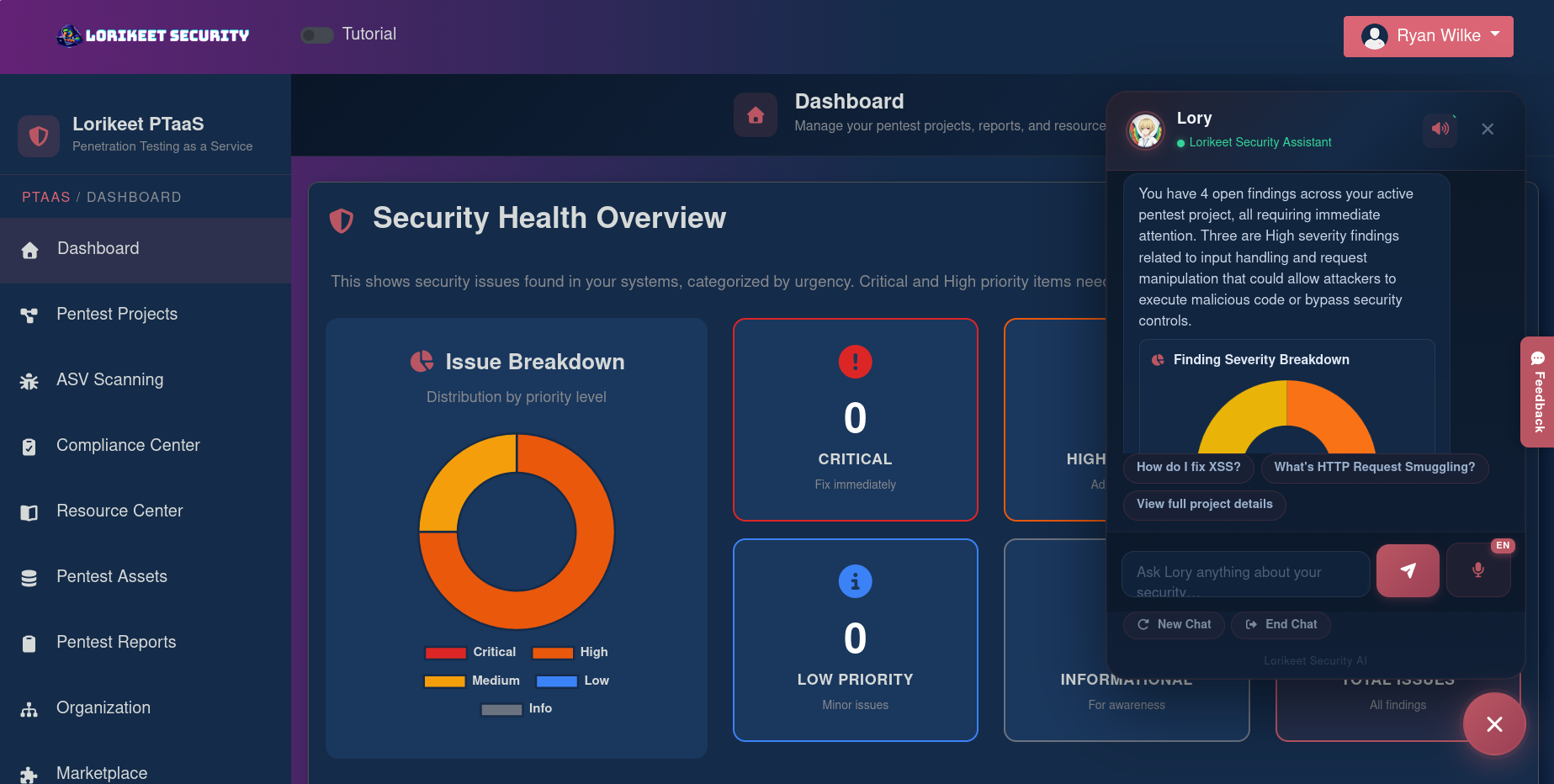
- ◆Live Engagement Tracking: Stop waiting for the final PDF. Use the portal to watch vulnerabilities as they are discovered in real-time. This allows your dev team to start patching critical API flaws before the engagement is even "finished."
- ◆Consulting "Lory": Use the AI assistant, Lory, which is trained on nearly 2,000 vulnerability entries. If the researchers find a complex GraphQL injection, you can ask Lory for specific code snippets to remediate it within your specific framework.
- ◆Compliance Automation Sync: If you use Vanta or Drata, link them here. Lorikeet is a partner for both, meaning your pentest results flow directly into your compliance dashboard for SOC 2 or ISO 27001 readiness.
Step 3: Pro Tips for Vertical SaaS Founders
If you are selling into the enterprise, a standard pentest isn't enough; you need a "Security Program." Here is how the pros use Lorikeet:
- ◆Leverage Free Retesting: Never "accept risk" on a finding because you're unsure if the fix worked. Lorikeet includes free retesting. Use it. Every. Single. Time.
- ◆The "Vibe Coding" Audit: If your team is moving fast using AI-generated code (Claude Code/Cursor), these apps often have unique security debt. Specifically request a "Vibe Coding Security Review" to ensure your AI hasn't hallucinated a backdoor.
- ◆VC Due Diligence Prep: If you’re heading into a Series A or B, run a Lorikeet "VC Due Diligence Review." It’s a specific lens that looks for the technical debt and security gaps that kill deals during the audit phase.
Common Mistakes to Avoid
- ◆Treating it like a Scanner: If you just want a list of outdated libraries, buy a cheap scanner. You use Lorikeet for manual, offensive research. Don't restrict their scope too tightly; let the researchers find the creative paths an attacker would actually take.
- ◆Ignoring the Human Element: Technology is rarely the weakest link. Use Lorikeet’s social engineering and phishing simulations. If your Head of Sales clicks a bad link, your SOC 2 certificate won't save you.
- ◆Siloing the Results: Don't let the pentest findings sit with the CTO. Use the compliance-ready reports to show your board and your customers that you have a managed security program, not just a tool.
How It Compares to Alternatives
In the SaaS ecosystem, security is a multi-layered cake. Flowtriq is your "shield" at the edge—it’s unbeatable for instant DDoS mitigation and ensuring your site stays online during an attack. Every SaaS needs that infrastructure-level protection.
However, Lorikeet Security is your "special forces" unit. While Flowtriq focuses on availability and traffic patterns, Lorikeet focuses on the integrity of your code and the depth of your compliance. If you need to stop a brute-force botnet, look at the former; if you need to pass a SOC 2 audit and ensure your API isn't leaking PII, Lorikeet is the superior choice.
Conclusion: Is Lorikeet Security Right for You?
If you are a bootstrapped lifestyle business with no sensitive data, Lorikeet might be overkill. But if you are a B2B SaaS company where "Trust" is your primary product, this is a no-brainer.
By combining manual pentesting with a continuous monitoring platform and built-in compliance partnerships (like Accorp Partners for CPA attestation), Lorikeet removes the friction of staying secure. It turns security from a cost center into a competitive advantage that helps you close bigger enterprise deals, faster.